The slow burn is back: falling for someone you didn't fancy
In 2010, 30% of US singles said they had fallen for someone they weren't attracted to at first. In 2026 it was 49%. Here is what the longest-running singles survey and two acquaintance studies say about attraction that grows.
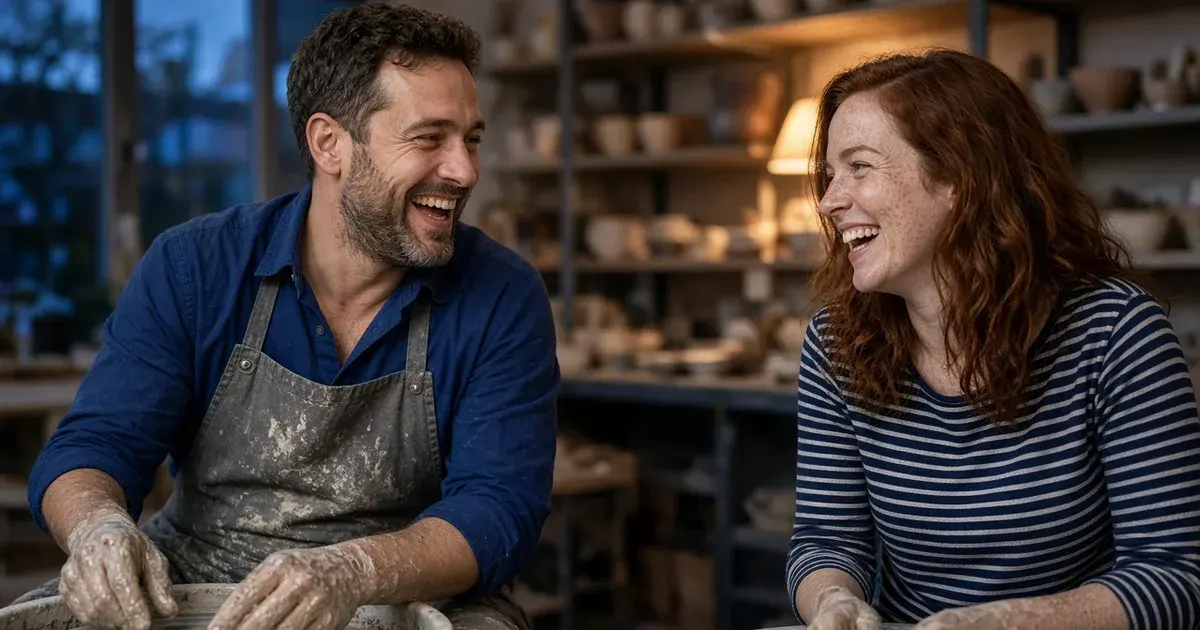
Yes, the slow burn is real, and by one long-running measure it’s more common than it used to be. In the 2026 Singles in America survey, 49% of US singles said they had fallen for someone they didn’t find attractive at first. In 2010, 30% said so.1
That is a self-report about people’s own histories, so it tells you how singles remember their relationships, not how any one attraction will turn out. Still, it’s a big shift across fifteen years of the same study.
Key takeaways
- The number nearly doubled. 30% in 2010, 49% in 2026, in a survey of about 5,000 US singles.1
- Talk leads. Of those who fell for someone unexpected, 47% credited great conversation, 41% shared interests and 35% shared values.2
- Second chances are up. 41% would try a second date after a dull first one, up from 35% in 2021.1
- Lab work points the same way. Agreement about who is desirable drops as people get to know each other.4
What does a slow burn actually look like in the data?
It looks like attraction that arrives after information. In the Match summary of the 2026 study, the leading reason singles gave for warming to someone was conversation, ahead of shared interests and values.2 Looks weren’t the starting point for these people. Getting to know someone was.
The same release has a twist worth knowing. Singles are also writing longer checklists: 34% now keep one for a long-term partner, up from 25% in 2021.1 And yet among people with a checklist, 46% say they’ve fallen for someone who didn’t fit it.2 Clear standards and surprise are rising together.
Why would attraction change after you know someone?
Two studies from the same research group give a plausible mechanism.
In the first, people rated opposite-sex classmates at the start and end of a semester, and long-term acquaintances in a second design. Ratings were generally more unique to the pair than shared agreement about who is desirable, and agreement dropped as people got to know one another.4 Put plainly: early on, people agree more about who is attractive. Later, your view of a specific person is much more your own.
The second study looked at 167 couples. Partners who started dating soon after meeting, and who hadn’t been friends first, were more closely matched on physical attractiveness as rated by outside coders. Couples who had known each other longer before dating were less matched.3 The authors frame it as competition easing when consensus fades. It’s a correlation in a modest sample, not proof that friendship causes attraction, but it lines up with what singles report.
What are the signs it’s a slow burn and not just friendliness?
The research doesn’t hand out a checklist, so treat these as questions to ask yourself rather than tests:
- Did your interest rise after specific conversations? That’s the route most people in the survey described.2
- Is your view of them now different from how your friends see them? That gap is what the acquaintance research would predict as you learn more about one person.4
- Would you have said no to a second date, and you’re glad you didn’t? You’re in the 41% who now say they’d give it a go.1
If two of those are true and you still feel nothing physical, that’s information too. Warmth and attraction aren’t the same thing, and nothing in these studies says one always turns into the other.
What doesn’t the research show?
It doesn’t show that slow-burn relationships last longer, are happier or are more stable. The survey asked singles about their past experiences, and the couple study measured matching on looks, not relationship quality. It also can’t tell you why the share rose since 2010. Changes in how people date, in who answers surveys, or in how people talk about attraction could all play a part.
For a broader look at telling a good fit from a familiar feeling, see how do I know they’re the one?. And if your pattern runs the other way, where interest fades once things get steady, why do I get bored in relationships? covers that side.
Try it
Think of someone who grew on you. What changed first?
People who talk about this
- Credentialed source
Alexandra H. Solomon
Relational self awareness, dating and building lasting relationships, drawn from her couples work and her Northwestern course.
- Credentialed source
Bella DePaulo
Research and writing on single life, including people who choose to stay single and live full lives on their own terms.
- Credentialed source
Eli J. Finkel
Research on how modern marriage and long term relationships work, and what partners expect from each other.
- Credentialed source
- Trending voice
Julie Menanno
How couples get stuck in conflict cycles and how to feel secure with a partner.
Further reading
Pew Research Center, 2020
Dating and relationships: Key findings on views and experiences in the US (opens pewresearch.org)National survey data on how Americans see dating today, including why many singles say it has gotten harder.
Sources
- 15th annual Singles in America Survey reveals how relationships, marriage, money and family are changing
- Match Unveils 15th Annual Singles in America Study
- Leveling the Playing Field: Longer Acquaintance Predicts Reduced Assortative Mating on Attractiveness
- Relational mate value: Consensus and uniqueness in romantic evaluations