Sunk cost in relationships: why people stay too long
You've already put in the years, the money, the effort. Walking away can feel like wasting all of it. Psychologists have a name for that feeling, and a set of experiments that show when it actually sways the decision to stay.
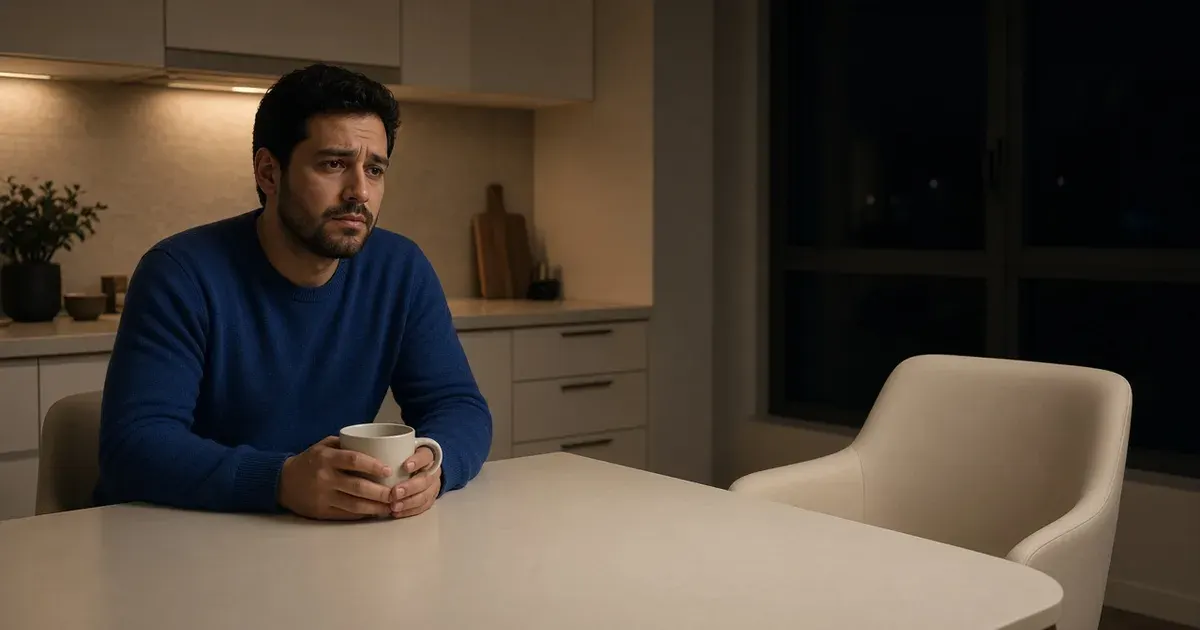
You’ve already put years into this. Maybe a lease, a dog, a group of friends who know you as a pair. Walking away can feel like throwing that away, which is why the decision gets so sticky. Psychologists call that the sunk cost effect: letting resources you cannot get back decide what you do next.4
The feeling is ordinary. Whether it should settle the question is another matter, and that is what the relationship studies tried to test.
Does a past investment really make people stay?
In one set of experiments, people were asked to imagine an unhappy relationship and decide whether to stay or leave. When the scenario included money already spent, or effort already poured in, more people chose to stay. A past investment of time, on its own, did not have that effect in the first experiment. A second experiment measured the decision differently, asking how much more time people were willing to put in, and there a sunk-time effect showed up: the longer the relationship had already lasted, the more future time people said they would give it.1
These were hypothetical scenarios, not diaries of real breakups, and they cannot tell you what you should do. They do show that the “we’ve already put so much in” instinct is easy to trigger, especially around money and effort.
Are all investments the same?
Not in the research that looked more closely. A 2008 paper split investments by timing, past versus planned, and by type, tangible versus intangible. Across five samples, the investments that most consistently predicted commitment, whether the relationship lasted, and how hard a breakup later felt were the intangible ones, and the ones still planned for the future.2
That complicates the simple sunk-cost story. A shared apartment is a past, tangible cost. A plan to move cities together, or years of actually telling each other the truth, is a different kind of stake. The first is already spent. The second is a claim about what you still want.
What else keeps people in?
A much older model of commitment, tested with college students in real relationships, found three ingredients, not one. People were more committed when they were more satisfied, when they saw poorer alternatives, and when they had invested more. Commitment, in turn, predicted whether the relationship continued.3
So “I’ve already put so much in” can be one reason you stay. It can also sit beside “I don’t see anything better” or “this is still mostly good.” Those are worth pulling apart, because they point to different next steps.
How do you use this without turning it into a scorecard?
A sunk cost, by definition, cannot be recovered whether you stay or go.4 The useful question is forward-looking: given what you know now, do you want the next year of this? If the honest answer depends mostly on not wasting the last five years, that is the effect the experiments were studying.
If the honest answer is that you still have plans, or that the day-to-day is still good enough, that is closer to the investments that predicted staying in the 2008 samples.2
The same fork shows up after a betrayal, and should I stay after cheating is about that narrower case. If the relationship simply feels flat, why do I get bored in relationships is a better fit than a sunk-cost frame.
Quick recap
- Sunk costs are unrecoverable, whether you stay or leave.4
- Money and effort already spent made people more likely to stay in a hypothetical unhappy relationship.1
- Planned and intangible investments predicted commitment more consistently than past tangible costs.2
- Satisfaction, alternatives, and investment all fed commitment in the original investment model.3
Try it
What's doing most of the work in the decision to stay?
People who talk about this
- Credentialed source
Alexandra H. Solomon
Relational self awareness, dating and building lasting relationships, drawn from her couples work and her Northwestern course.
- Credentialed source
Bella DePaulo
Research and writing on single life, including people who choose to stay single and live full lives on their own terms.
- Credentialed source
Eli J. Finkel
Research on how modern marriage and long term relationships work, and what partners expect from each other.
- Credentialed source
- Trending voice
Julie Menanno
How couples get stuck in conflict cycles and how to feel secure with a partner.